
Your appetite has gone quiet, and you have just watched what the treatment carries and what it hands straight back to you.
The pull towards food has loosened. The plate you used to finish looks enormous. Underneath the relief sits a flatness nobody mentioned at the consultation.
The treatment works on the body. Everything the eating was doing for you is still sitting where you left it.
That is why the R4 Method opens on a stage called Reset, whose whole job is finding out what you are actually carrying.
Two changes, and neither is a verdict
These medicines copy a gut hormone your body already releases after you eat. They act on appetite. They act on the nervous system in your gut and on the one in your head.
They also slow the stomach down. Food leaves it more slowly than it did in the spring, so a portion that was ordinary a month ago now arrives on top of breakfast.
Both of those are the treatment doing the job it was prescribed for. Neither is a report on how well you are coping.
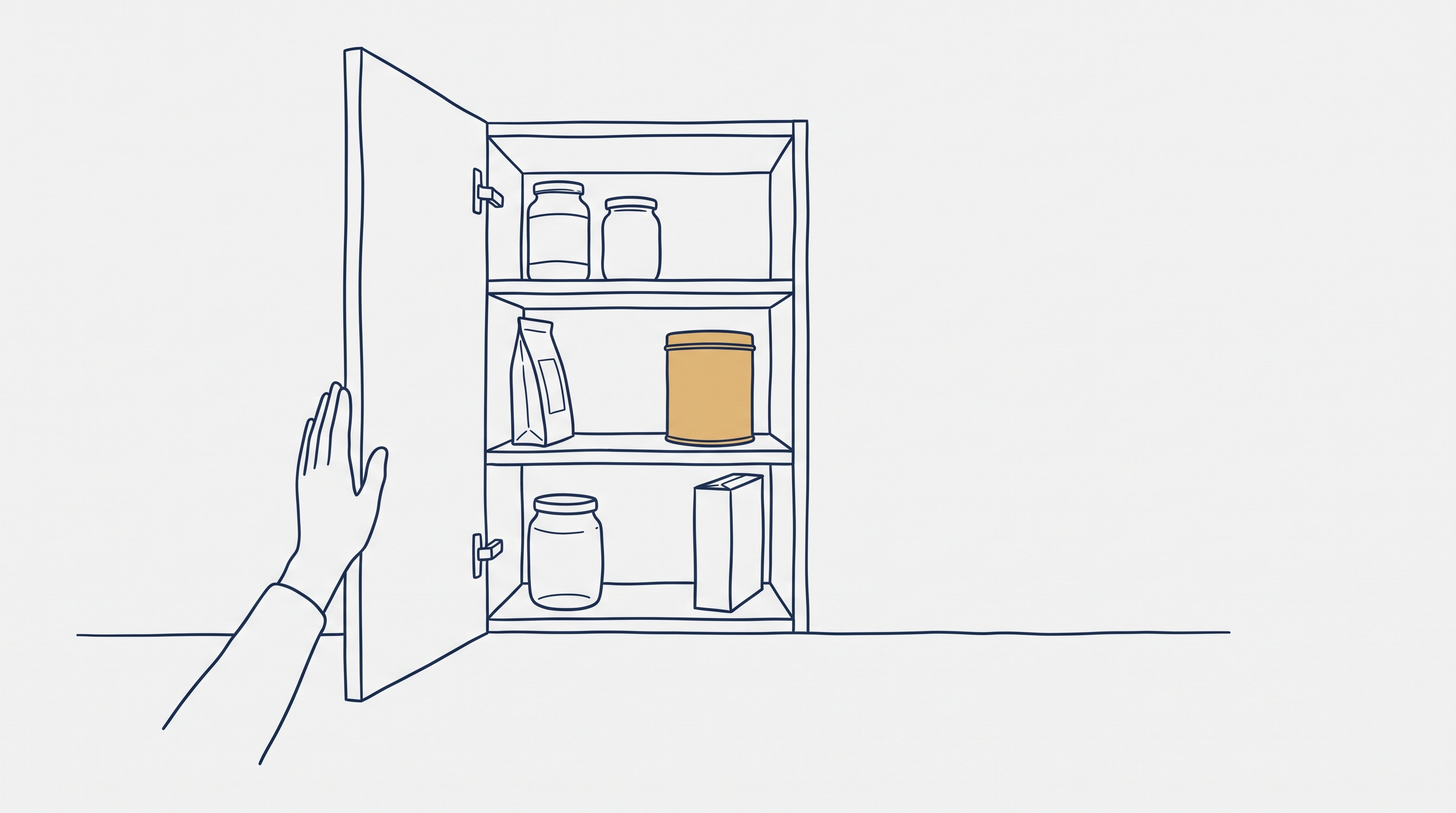
Nothing on those shelves changed when your appetite did. What changed is how loudly any of it asks.
Food noise goes quiet, the reasons stay
Food noise is the running commentary about food that plays whether or not you are hungry. What is in the house. What you will do about it. What you ate yesterday and what that says about you.
"I am smaller now but I still do not feel like myself."
That sentence turns up early. Something is going well and something underneath it has not moved at all.
The evidence this course rests on separates the two. Eating set off by the sight or the smell of food does quieten. Three other things carry on much as before.
The pull that arrives in the evening when nothing is actually wrong
The reaching that happens in stress, in boredom and in celebration alike
The flatness that turns up when the thing you used to reach for stops giving back
Reset names what the eating was for
None of those three is hunger, so a smaller plate answers none of them. They do not hold still, either.
Food noise can come back up in the day or two before the next dose is due. It fades during treatment as well as after it. A loud day six is a pattern the research already describes.
What does the treatment reliably quieten, and what does it leave alone?
Eating set off by a sight or a smell quietens. Eating that was doing a job for a feeling is not reliably touched.
What is the Reset stage for?
Finding out what you were actually carrying, before anything else is asked of you.
So Reset hands you one question, asked the moment you catch yourself heading for the kitchen with no hunger in you. "What was food doing for me that had nothing to do with hunger?" If it starts to feel like a rule about eating, take that to your prescriber and ask for specialist support.
A smaller appetite carries more
Whatever goes in now does more work, because there is less of it. So on every eating moment the protein food goes on the fork first. That first bite is the whole of the technique. The government reference intake is 0.75 g of protein per kilogram of bodyweight a day. Put your own weight and your own day into it.
Look at the figure in the panel, then picture your actual plate from yesterday. The gap between those two is what the first bite is for.
The treatment creates the window. What gets done inside it is yours, and Reset is where that work starts.
Where this lesson comes from
This lesson is drawn from the course author's own material: the R4 Method research and curriculum document compiled in July 2026, and the manuscript and practitioner notes behind it. The account of what the treatment does, the description of food noise, the four stages and the Reset question are all hers. The 0.75 g per kilogram figure is the government reference nutrient intake, and it was written for general health. The figures in the panel are yours, produced from your own weight. Nothing here is a measured result about Dr Olubunmi Aboaba, her practice or you.