
Keeping What You Already Have
When the scales finally start moving, what exactly is it that leaves?
That question sounds academic until you learn the answer, and then it turns into the only part of this course with a deadline on it.
Weight is not one substance. Something goes that you wanted gone, and something goes that you would rather have kept.
There is a measured answer to the proportions, and it is calmer than the internet version.
What a scanner actually measured
A substudy of a large tirzepatide trial put 160 participants through a body composition scanner at the start and again seventy-two weeks later. Nearly three quarters of them were women.
Of the body weight lost, approximately 75 per cent was fat mass and 25 per cent was lean mass. The same proportion appeared in the placebo group.
That second sentence is the one the headlines drop. The split is what weight loss does, on any route, and the regulator's own label says semaglutide produces greater fat mass loss than lean mass loss.
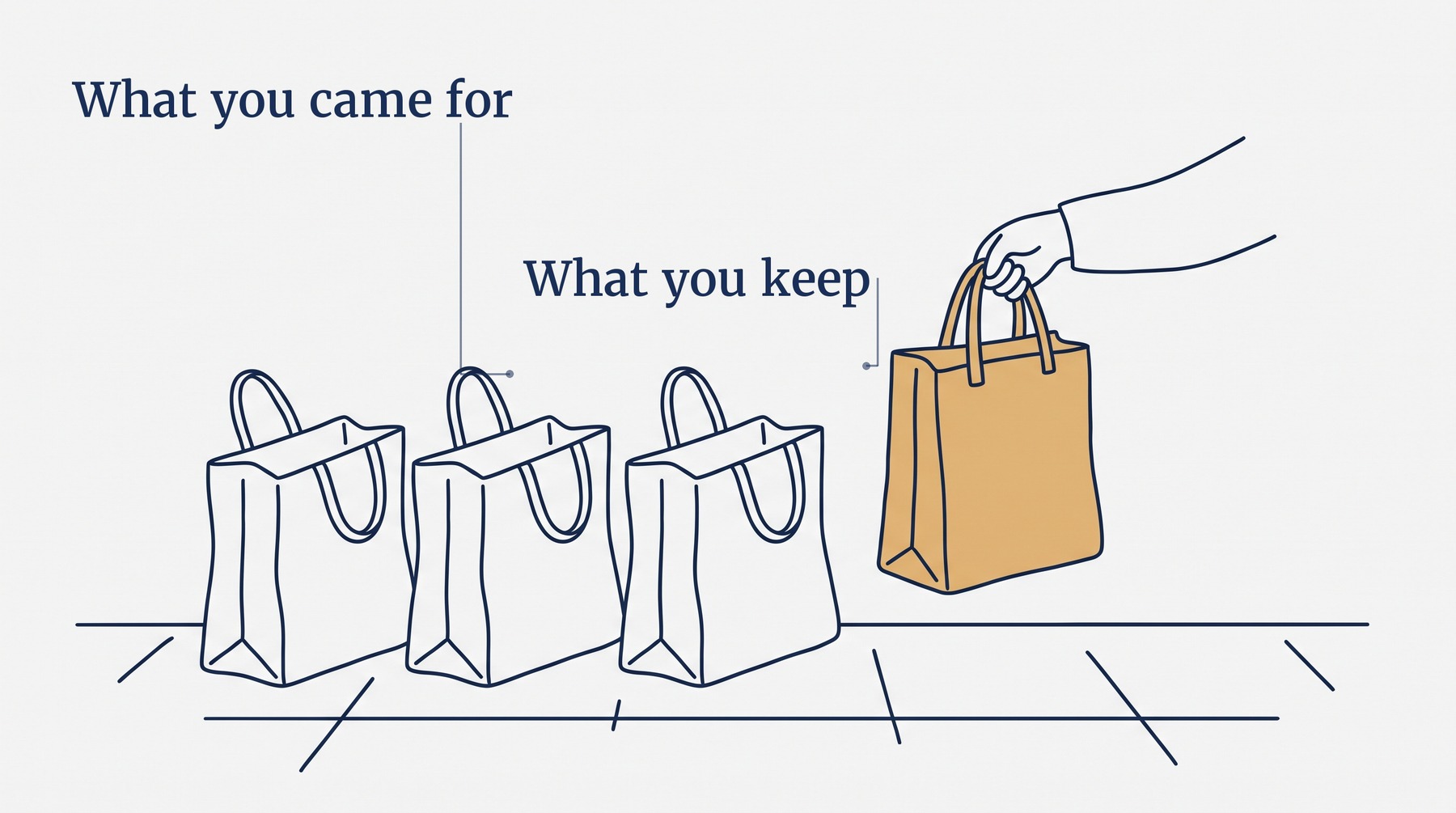
Three bags out of four are the ones you came for. The fourth is the one worth arguing with.
The guideline that predates all of this
Here is what makes this manageable. The instruction that protects the fourth bag was written for every adult in the country years before any of these pens existed.
The same guidance asks for at least 150 minutes of moderate activity a week, spread over four or five days. Moderate has a test you can run without a watch: you can still talk, but not sing.
The NHS names the groups to cover: legs, hips, back, abdomen, chest, shoulders, arms. Carrying shopping, climbing stairs, a resistance band, bodyweight work at home and a class all qualify.
Fitting it to the appetite you actually have
A strength session on an empty tank is a short one. That is fine and it still counts.
Two things make it survivable. Put the session near an eating moment, so there is something in you when you start. Keep it short.
Pick the two that already have space in them. The days matter more than the workout.
Something for legs and hips, something for back and arms. A sit to stand from a chair and a row with a band covers most of it.
Protein first at the eating moment before or after. This is where the first lesson and this one meet.
Where your week actually is
Read your own week before deciding anything about the next one. Put in the week you actually had.
Two strengthening days and 150 minutes is the published bar for every adult. A week that lands under it is a week with a number attached, and a number is something you can move.
Open the calendar on your phone. Choose two days in the next seven, name them, and put a twenty minute strength session on each.
Three bags out of four leave on their own. The fourth one only stays if it is asked to.
Where these facts come from
The 75 to 25 proportion comes from a scanner substudy of 160 participants published in a peer-reviewed journal in 2025, and the placebo comparison is the paper's own finding. The fat against lean sentence is quoted from the regulator's approved prescribing information. The two days a week, the 150 minutes, the muscle groups, the talk but not sing test and the line about speaking to a GP are quoted from the NHS physical activity guidelines. Your own week is yours. Nothing here is a measured claim about Dr Olubunmi Aboaba.