
The Day You Do Not Want Anything
"I have not really eaten since yesterday, and I do not even mind." That sentence turns up in the first months more than any other, and it describes the day this lesson is about.
By four in the afternoon you have had a coffee and half a yoghurt, and the thought of anything else is faintly repellent. That is a real decision with two honest answers.
Skipping the day entirely is one answer. Running the smallest possible version of it is the other, and only one of them leaves you dehydrated.
Work the decision properly, because this day comes round again.
The floor underneath the whole day
The leaflets are loudest about one thing, and it has nothing to do with food. Both manufacturers warn that sickness, vomiting and diarrhoea can cause a loss of fluids, and both instruct you to drink enough to prevent it.
The tirzepatide leaflet adds that the fluid loss may lead to a decrease in kidney function. The regulator's label tells prescribers to monitor kidneys during dose increases in anybody reporting severe gut symptoms.
Three separate publishers, one warning. Thirst went quiet alongside the appetite. The signal you relied on has stopped reporting.
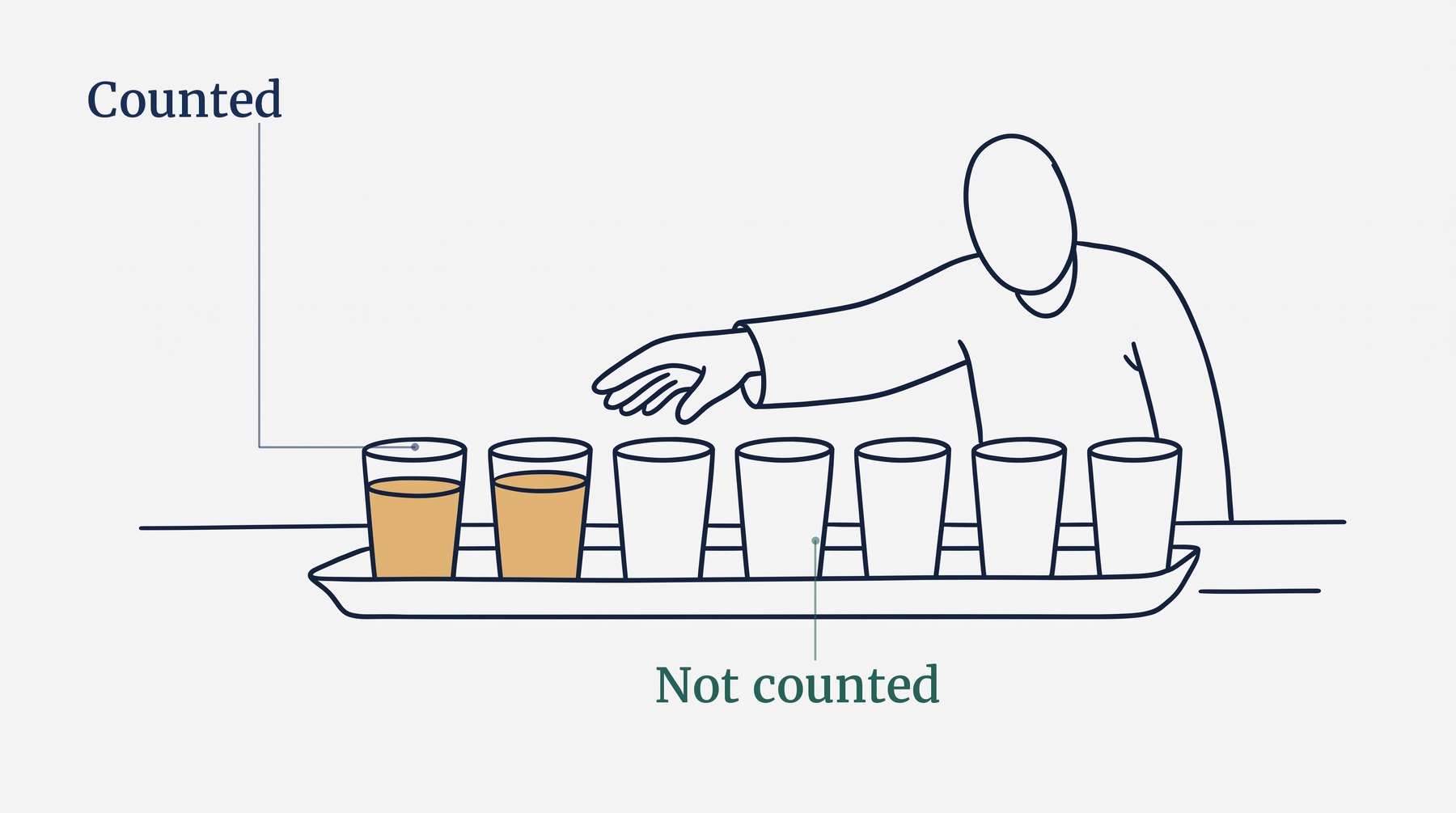
The government guide is six to eight cups or glasses a day, and water, lower-fat milks, sugar-free drinks, tea and coffee all count.
The smallest version of an eating moment
So back to four in the afternoon. The answer that keeps working is to shrink the eating moment until it fits, with its order intact.
Half a tub of yoghurt eaten beats a plan abandoned at six. Build the day in one direction. Stop when your body says so:
Put a glass down before you decide anything about food. It settles the fluid question on its own, and that is the part three publishers warn about.
Yoghurt, a boiled egg, a few spoons of beans. Whatever is in the fridge and needs no cooking.
Fruit, bread, vegetables. Abandon this part guiltlessly, because the appetite always reached it last.
Two thirds of that is still two thirds, and nobody regrets the day where the glass and the egg happened.
What quietly makes the day worse
Alcohol has its own blunt line on both NHS pages. It is best not to drink. Alcohol can increase side effects like feeling or being sick.
A glass of wine on a day when your stomach is emptying slowly has a predictable ending. Knowing that beforehand beats resolving to be sensible.
A drink is in front of you before any food decision is made
Something with protein in it went first, however small
Nothing was abandoned out of guilt about the rest
Anything that will not settle is written down for your prescriber
Which day is yours
Two versions of tomorrow exist and you already know which one it is.
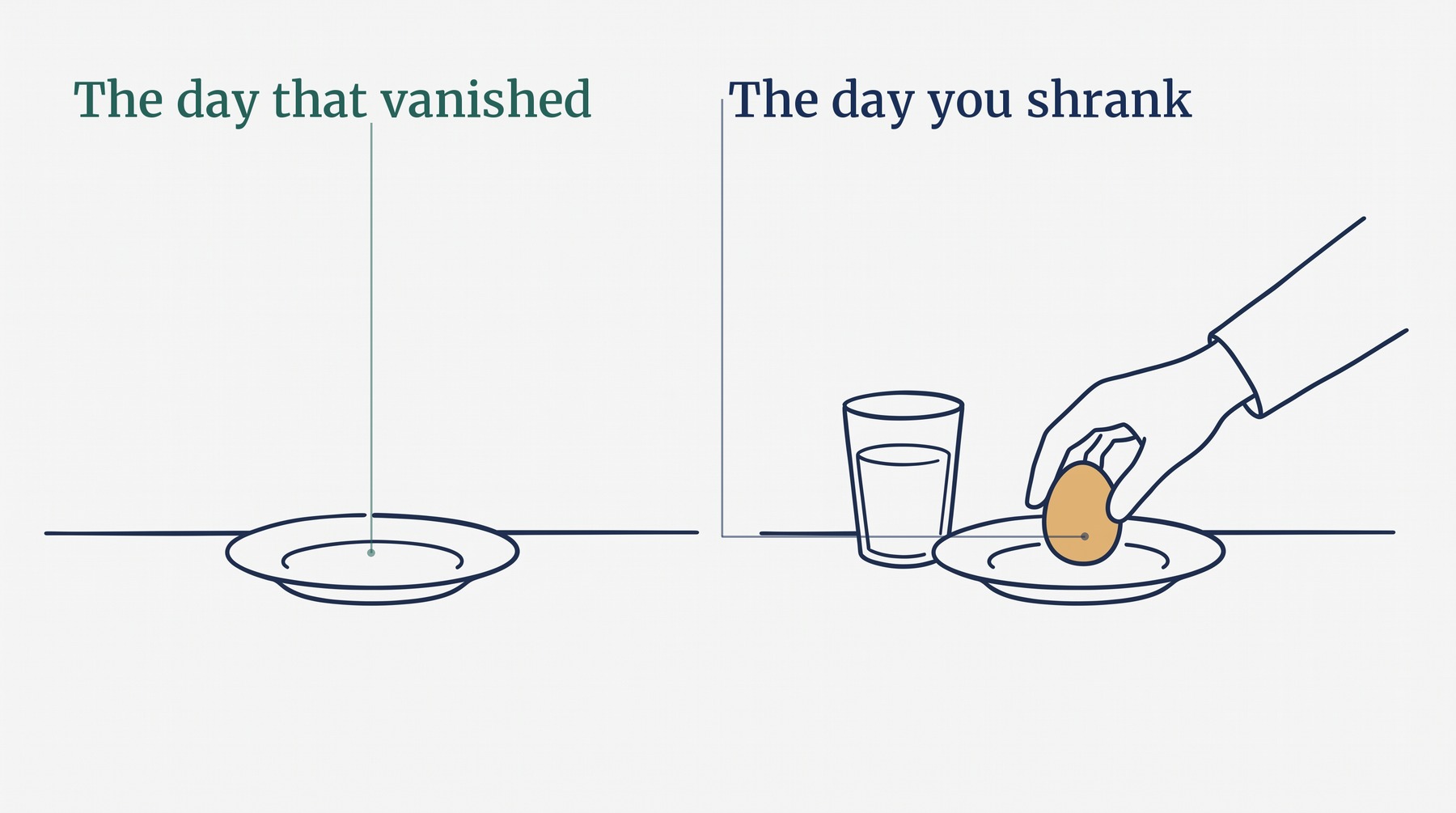
On the easy days the order carries you and the plate looks after itself without much thought from you. On the flat days that order is the only thing still working.
So what does the smallest honest version of your flattest day this week actually look like?
A day you shrank on purpose is still a day you ran. A day that vanished is a day nobody planned.
Where these facts come from
The dehydration warnings are quoted from the approved patient leaflets for both medicines and from the regulator's own label, which also carries the kidney monitoring instruction. Six to eight cups or glasses a day, and what counts towards it, come from the NHS Eatwell Guide. The alcohol line and the advice about a side effect that does not go away are quoted from the NHS pages for both medicines. Nothing here is a measured claim about Dr Olubunmi Aboaba or your own day.