
Getting Through the Fourth Week
The calendar reads week four, and something changes on Thursday whether or not the last fortnight went well.
Both leaflets describe one rhythm. The starting amount runs for four weeks, your doctor then moves you up, and the pattern repeats until you reach the level you stay on.
The climb is designed to be climbed slowly, and the regulator says so in the section written for prescribers.
Knowing that changes what a rough week means. A rough week is information, never a verdict.
What the four week block is actually for
The escalation schedule exists, in the regulator's own words, to minimise gastrointestinal adverse reactions. The slow build is how your gut is given time.
That is why the fourth week carries weight. It is where you find out what your body made of the block just behind you.
Write the dates down. Four weeks is far enough ahead that nobody remembers, and near enough that a dinner or a long drive can move by a day.
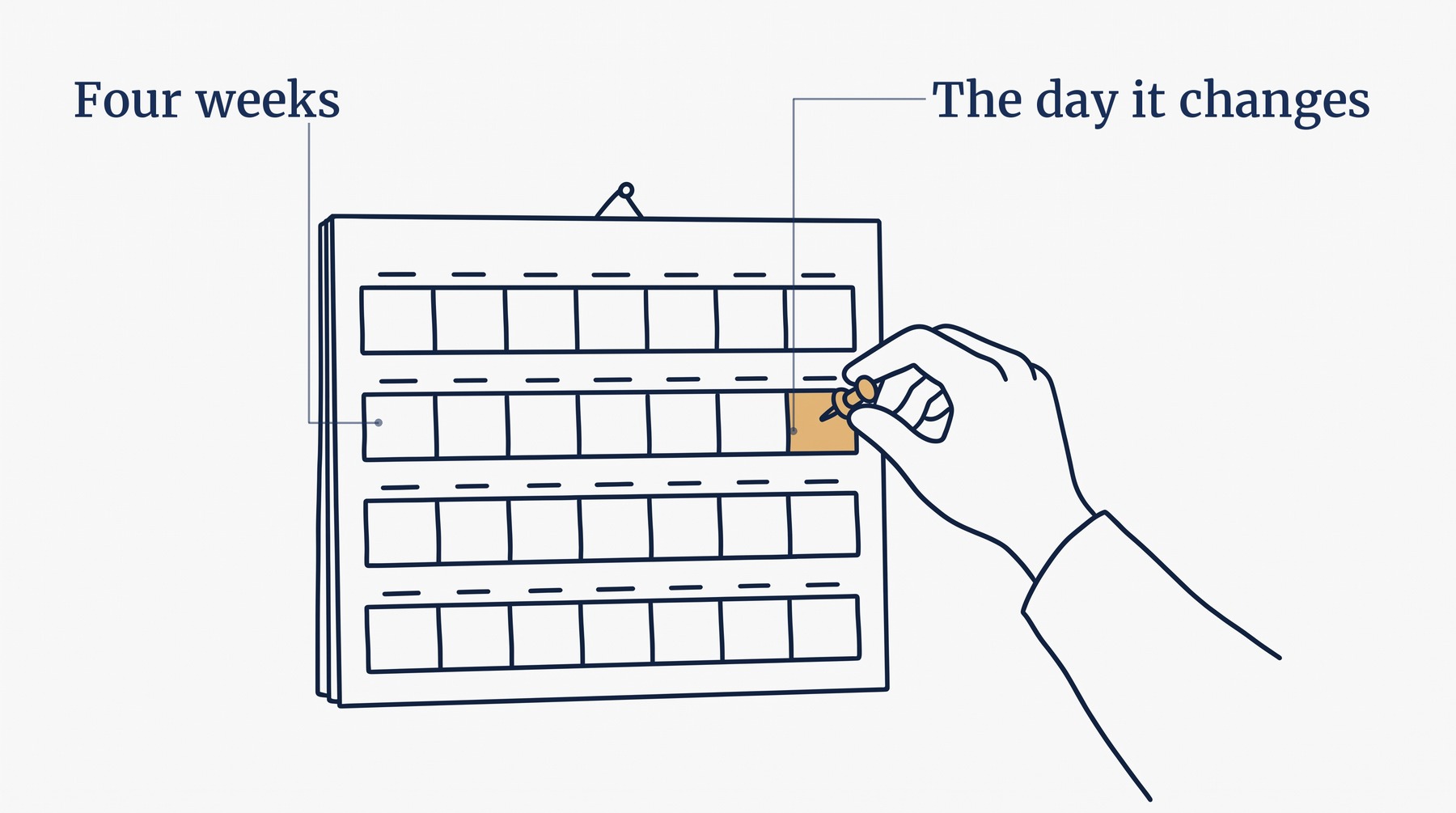
A climb with dates on it is one you can plan a life around.
What the leaflets actually list
The manufacturers grade side effects by the number of people who report them, and the wording is precise. Very common means it may affect more than 1 in 10 people. Common means up to 1 in 10.
Under very common both leaflets list feeling sick, being sick, diarrhoea, constipation, stomach pain and feeling tired. Under common sit indigestion, bloating, reflux, gallstones, hair loss and a change in the way food tastes.
Reading that list cold is alarming. Reading it beside the trial figures is a different experience.
Nausea was reported by 44 per cent on the medicine and 16 per cent on placebo. Almost everybody who felt sick carried on anyway. Both leaflets say why: these effects are worst at the start and settle for the majority over time.
The sentence you are allowed to say
The approved prescribing information tells the prescriber that if a dose is not tolerated, they may consider delaying the step up by four weeks.
So the climb has a pause button and your prescriber holds it. Raising it is not asking for a favour. You are describing a week, and that week is clinical information they need.
Being sick repeatedly, or unable to keep fluids down
Severe stomach or back pain that does not go away
Anything the leaflet itself marks as serious
Flatter days right after an injection
Food tasting different for a while
Bowels that changed pattern but are moving
What the fourth week is for
Treat the last week of each block as a short report written for somebody else to read.
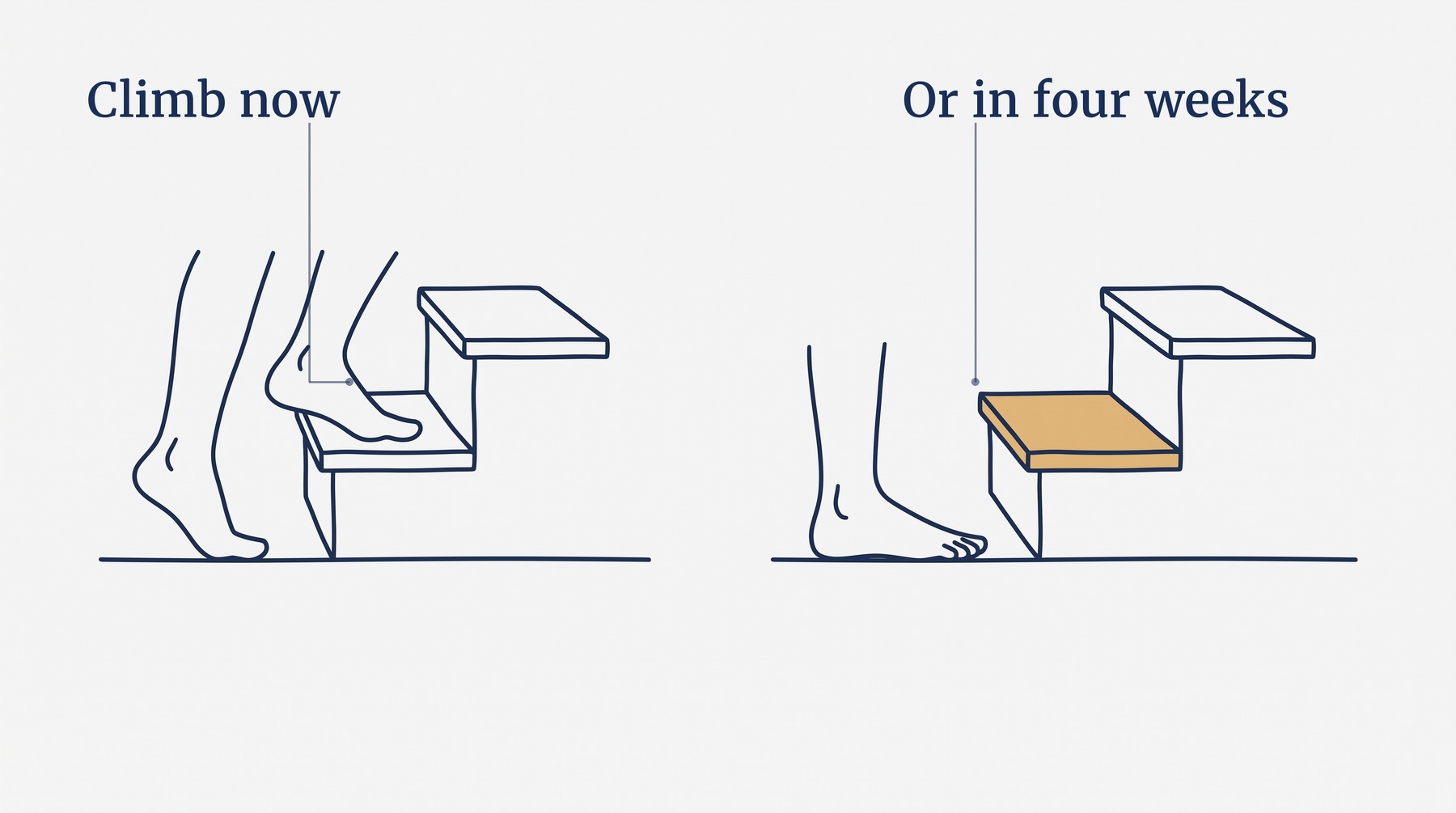
Three lines are enough. What you managed to eat, what your bowels did, and whether the sickness lasted two days or all seven.
Hand that over on the day the dose is discussed. It is the only evidence anybody has about how the block actually went.
A rough block is a reason to talk to a prescriber, and never on its own a reason to stop.
Where these facts come from
The four week rhythm, the frequency wording and the side effect lists are quoted from the approved patient leaflets for both medicines. The 44 per cent and the 6.8 against 3.2 per cent come from the regulator's own adverse reactions table for semaglutide 2.4 mg, with the trial arm sizes printed beside them. The contraception line is quoted from the NHS tirzepatide page and the regulator's tirzepatide label. Nothing here is a measured claim about Dr Olubunmi Aboaba or about your own treatment.